- ARMANDO ARCOS BAIL BONDS
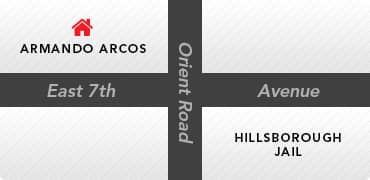
- 1904 Orient Rd., Tampa, FL 33619

No Obligation Consultation
No Obligation Consultation
 Tom was a good kid. He’d had a few scrapes in high school, but he’d gotten himself straightened out, found a better crowd to run with, and was now away at college.
Then came the call. The one call he was allowed to make. To Mom. She’d never had a reason to retain an attorney, and besides, he was 80 miles away at the university.
What to do. Panic sets in as she jumps in the car to make the trip. She doesn’t know what she’ll do when she gets there. Maybe someone at the jail can help her…
Tom’s Mother is not alone
If you’re like Tom’s mother, all you know about bail is what you’ve seen on TV or at the movies.
It would be to your advantage to know the in’s and out’s ahead of times—life gets a little quirky occasionally. Good to be prepared.
This guide will give you the information you need to act expeditiously and properly should you find yourself at this end of that phone call, getting a call from a friend—or needing the service for yourself.
The only thing anyone who’s been arrested wants to do is get out of jail. Understandable—it’s a nasty place—especially in the holding area where an arrestee is thrown in with a variety of people.
That’s fine, the court says, but we want to make sure you’ll return for trial. This is where the bail arrangement intervenes. To be released the individual needs to fund their freedom with an amount set by the chief judge of the county in the sheriff’s office.
This is where the situation could become confusing for an individual who is confronting the system for the first time. Here are the options to consider:
The entire amount of the bond is paid. The amount is theoretically returned when the offender appears in court (make sure you read further to understand that you won’t necessarily get all that money back).
A bail bondsman is paid 10%; he provides the rest to the court. Your 10% amount is not returned and is considered to be the bail bondsman’s fee. Moreover, Florida regulations state that bondsman’s fee will be exactly 10%, no more, no less. He is forbidden to offer a lower price, or charge more than his competitors. There are exceptions: if bail is under $1000 and if bail is set at $900, the price will be $100, not $90.
The difference between bondsmen then must be in the service they render, so look online (if you have the time) and see if you can notice any differences in their services. They’ll still be competing.
Responsible for paying the local holding facilities for detaining offenders, agencies such as the FBI or the U. S. Marshall’s office may arrest someone in Orlando and pay the Orlando jail for detention services. Fiduciary for these inmates is set at 15% of the bail amount and considered ample so that a minimum does not apply.
There is the occasional request to reduce bail and it is possible to do so. However, the bonding agency is not empowered to do so. Nor are they allowed to refer their clients to an attorney. The attorney selected by the offender is authorized to present the appeal.
Now that we have the basics clearly established, there are additional issues to consider.
Turns out, he’s worth that 10%.
The court has no sympathy for anyone who misses their court date, nor do they care why. It’s up to the defendant to find their way to the right courtroom on the appointed day at the appointed time. You should be confident of the reputable bondsman’s assistance in this regard.
If the arrestee lacks the information necessary to be where he needs to be and ends up somewhere else—even if it’s a courtroom—he stands a good chance of being rearrested and the process starts all over.
Unfortunately, the courts have gotten so complex, particularly with regard to who gets heard where, it is almost impossible to find your way around the system without experience or a map.
Ah, but the bail bondsman has the map and he wants his money returned, so how motivated is he to make sure the offender gets to the right court on time? Here is a service possibly worth 10%, wouldn’t you agree?
There’s more to learn about the court system than you really want to know
In larger cities, courts are almost kaleidoscopic. Turn around and a judge may have loaned out his courtroom to another judge who’s forced to hold a quick hearing. No problem, there’s a small courtroom down the hall he can use for your case. Even the clerks get confused—but not your bail bondsman, especially if his organization amounts to more than a receptionist.
If you’ve taken the cash route and borrowed from a friend or relative who may have valuables at risk, and if, for some reason the court date is missed, tragedy strikes. Hiring a bail bondsman avoids this disaster and puts your mind at ease. You’re not risking a relationship and he’ll recoup his loss with the next bond. You can’t recoup a relationship that easily. Best not to test it under these circumstances and use a bail bondsman instead.
The cash bond paid at the station is also vulnerable to fines, court costs, and fees. With funds getting more and more scarce, courts are less and less reluctant to confiscate cash bonds, or at least part of them, to pay some of their expenses. You won’t have to use your imagination to guess how difficult recovering your cash bond from the court might be. In the judge’s possession, at his discretion, it might not be seen for weeks, months. Well—use your imagination. Then there are the “interested parties” who will take their share of the “pie,” and look, there goes another $50 into someone else’s (legitimate, now) funds.
A surety bond from a bail bondsman, on the other hand, is only used for a guaranty that the defendant will appear in court and valid until the case has been adjudicated or dismissed. There are no laws regarding oversight between courts and bondsmen. As a result, the court is under no obligation to notify the bondsmen of court schedules. However, the state is prohibited from taking a surety bond unless the bonding agency has received a 72-hour written notice of court date mailed to the bondsman before the defendant’s appearance is required.
No brainer.
The state will grant a license to anyone who registers with the state, to operate within that state, and therein is the clue to what’s out there. You don’t know for certain whom this person is that you’re trusting to do the right thing under these serious circumstances. Moreover, it turns out there are many nasty things some of them do to cadge money.
There are bail bond agencies who network with agencies in other states, so that arrangements can be made in state for an arrestee to be released from a jail in another state.
If the insurance company supporting the bondsman is willing, they will tolerate bail for a federal arrestee, but it’s rare; hard to get money back from the feds.
Instead of being forced to look at a list by the phone, now is a good time to put a few notes down, particularly if the occasion arises and you have little time to make a few calls to the bail bond agencies in close proximity to the jail. Here are a few things to ask: (the first question, by far, being the most important):
So now, you have a good idea of the lovely scams some bail bondsmen will use to try and manipulate their clients.
Don’t forget, they can charge no more AND no less than 10% of the bail so don’t be fooled by a bail bondsman who offers you a “deal.”
In the meantime, they’ll check you and the inmate over pretty thoroughly before they’ll hand you anything to sign. They have their ways of getting a quick background check, so be sure your record’s clean before you pick up the phone. Some bondsmen can be empathetic to the extent that they’ll get a promissory note or indemnity agreement from the person filing for bail if their record is good.
Credit cards are used most often, particularly when the individual is from out of town, or doing business on the phone.
Reputable companies will accept cash or checks for that 10% fee. The larger companies will offer interest free payment programs for weekly or monthly payments.
There are those occasions where the amount is such that collateral may be required, so be prepared if you think this will be the case. It assures the bail bond agency that not only will they receive their fee, but they will also be more confident that the arrestee would appear in court. Home equity, other property equity, an indemnity agreement, promissory note, stocks, jewelry, or most any other asset with an established value may be considered collateral.
Once the bondsman is selected, bail is arranged after about 10 to 20 minutes to fill out forms. (It can be done in person or by phone if you have the proper credit card, which leaves the one doing the bailing free to remain where they are if the arrestee is somewhere else.)
When the inmate is free to leave under whatever means available to return home, some bondsmen are kind enough to provide transportation home.
Most bail bond agencies are open 24/7. Pass on the ones that aren’t.
It’s an even better idea to find an agency close to the jail when you have to find them at night—perhaps in an unfamiliar part of town or in a town you’ve never visited. The officers at the jail can be helpful in this regard—don’t be bashful—ask.
There is a provision for offenders who have outstanding warrants for their arrest. There are many occasions for this circumstance and individuals who believe there may be a warrant out on them should check the records to be sure. Calling a bail bond agency and asking them to check the records is the best way to be certain.
If there is a warrant, most counties (due to overcrowding) encourage you to go to an auxiliary facility and pay your bail rather than go through the process of being detained.
That same bail bond agency you called will be glad to walk you through the process so that you’ll be fully prepared to complete the process in one visit and in a timely fashion. If you can find a bail bond agency close to the facility where you’ll be paying the bond, you can get through that process even more expeditiously.
Specifics for the Hillsborough County Self-Arrest Program:
Being uninformed about this process could result in a considerable amount of inconvenience if an occasion arises. Reading about it now could be helpful to a family member or friend in the future. Good to know.